Archive for the 'standards' Category
May 22nd, 2013 by JJW
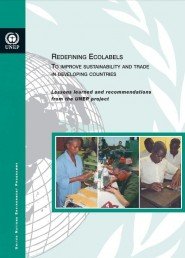
In 2012, at the invitation of the United Nations Development Programme (UNEP) Sustainable Consumption and Production branch, I had the pleasure of interviewing and working with dozens of stakeholders from over a dozen countries to explore how ecolabels are encouraging sustainable development and improving international trade opportunities. The report “Redefining ecolabels to improve sustainability and trade in developing countries: Lessons learned and recommendations from a UNEP project” explores both the history and background of ecolabelling as a tool to promote sustainable production and consumption and to evaluate a specific five-year UNEP project.
You can download the report here on the new (and very informative) Sustainable Production and Consumption Clearinghouse.
More about this report from the introduction:
This report aims to evaluate to what extent the project succeeded in reaching its intended goals, to draw lessons learned, and present recommendations for future actions. The report contains four major sections. Section I introduces readers to ecolabels and the differences between different information systems, provides an overview of how these systems are used in developed and developing countries as well as introduces the major challenges, opportunities, and debates around voluntary labelling and standards globally.
Section I also traces the debates about ecolabels as possible barriers to trade. This includes possible implications of recent World Trade Organization cases and other issues affecting the discussions on Technical Barriers to Trade, and the relevance of this UNEP project to the debates, including the importance of working with established rules, practices, and disciplines that avoid unnecessary barriers in developing and using internationally-accepted ecolabels.
Section II introduces the UNEP ‘Enabling developing countries to seize ecolabelling opportunities’ project and partners, and the assessment methodology.
Section III of this report focuses on the assessment of the project results in relation to its goals. This section is based on interviews with key stakeholders in the project, as well as background research. It reviews the project as a whole, including a sector and country analysis. It describes the baseline situations and major developments that happened during the five years of the project.
Section IV provides lessons learned and recommendations to project partners and other stakeholders on further improvement and future projects. Suggestions are targeted toward all stakeholders involved in the ecolabelling field.
The report’s methodology is based on the compilation and review of all project documents and relevant literature on trade and ecolabels. It also involved interviews with participants from the project, including funders, implementing bodies, country partners, and some target enterprises when available.
July 27th, 2012 by JJW
I don’t usually post media like this on my blog, but this video from my colleagues at Rainforest Alliance is too powerful to be ignored. Credible sustainability standards and labels with third party certification help you know what you’re buying so you can be assured the products you buy are not harming the people or the ecology.
Fight deforestation, fight climate change. from Rainforest Alliance on Vimeo.
Video taken from the Rainforest Alliance website. See the accompanying article here.
January 3rd, 2012 by JJW
 I’d like to share what I’ve been working on in 2011, along with some inspiring thoughts for 2012 and beyond.
Since moving from Beijing to Thailand in mid 2010, I’ve had the pleasure to work on a number of projects with many outstanding organizations and individuals. I have continued to travel to China every two to three months on various projects to grow relationships and extend trust in face-to-face meetings. I look forward to continuing and deepening collaborations in 2012 and beyond.
These projects have given me the opportunity to grow relationships in China, Asia, Europe, North America, and globally through new approaches to my interests, such as multi-stakeholder governance (mainly international multi-stakeholder voluntary sustainability standards), competitiveness (through a sustainability edge), sustainability information transparency (getting data about sustainable development to the decision makers who matter most), sustainable leadership (leading from ones higher purpose), international sustainability standards (potent tools to grow a just, green global economy), and the management of complex and visionary change (life, research, writing, and communicating).
This post is both a note of appreciation to my recent collaborators, a description of what we have been working on, and thoughts of what is to come:
 The ISEAL Alliance: Advising on China Engagement and Sustainability Information Transparency: I continue to advise the ISEAL Alliance (the global association of international sustainability standards) and its members (leading sustainability standards like FSC, MSC, SAI, FairTrade International, GoodWeave, the Alliance for Water Stewardship, Rainforest Alliance, and other) on approaches to China engagement. I also work to help ISEAL and its members adapt to the growing “radical transparency” or “sustainability information transparency” space ushered in through new information technology and leading companies and organizations like GoodGuide, the Ecolabel Index, the Sustainability Consortium, EkoBai, and many others.
 For 2012 and beyond: I have been collaborating with the ISEAL Alliance and its member standards since 2008 when I represented AccountAbility in China and helped organize a meeting in London between standards bodies and some of China’s top trade researchers in a project between the International Institute for Sustainable Development, the Chinese State Council’s Development Research Center, and the Swiss SECO, detailed in the paragraph below.
I work with the ISEAL Alliance because I foresee that the potent combination of dependable, measurable multi-stakeholder standards, and the tools to bring this information to decision makers will continue to dramatically improve the sustainability of global trade. I advise ISEAL on China because sustainability standards are a crucial aspect of civil governance that provide pathways for China to have its sustainable development efforts recognized in global markets. Additionally, the development of new standards with Chinese participation in setting the “rules of the game” are crucial to China’s soft power and its peaceful integration into a the emerging world order. For more information, you can read the IISD report I co-authored on “Advancing the Sustainability Practices of China’s Transnational Corporations.” (external link).

 WWF/USAID: Roundtable on Responsible Live Reef Food Fish Trade in China: I was hired by the WWF Coral Triangle Network Initiative, with support from USAID, to design an initial strategy and work plan that brings together the key business and government stakeholders in mainland China and Hong Kong to improve the sustainability of the trade in live fish from the Coral Triangle region. Greater China’s role, as the largest buyer of this fish (sold mainly in restaurants and hotels), is one key to ensuring that coral ecosystems are protected from overfishing and unsustainable fishing practices.

For 2012 and beyond: Like WWF’s important and game-changing Market Transformations Initiative (see Jason Clay’s inspiring TEDx talk), this project aims to involve companies and governments in protecting shared resources in biodiverse regions. The work is difficult and many existing incentives encourage unsustainable practices, but I always enjoy a challenge, especially when it involves mechanisms for helping China become a more trusted neighbor and regional player. From an economic perspective alone, it may be easy to overlook such a small portion of the overall fish trade value chain, but when you factor in the reputations of hotels, restaurants and greater China itself, I predict that increasing the sustainability of this kind of commodity value chain will become part of China’s charm offensive in the years to come. Other commodities with soft power kudos available for China’s taking? Palm oil, sugar, fish, timber, and soy, to name a few.

"Tiger Howl Rock" (left) and "Listening to the Rain Pavilion" (right) at Shanghai Confucius Temple, where I taught a class on sustainability and leadership in the Chinese context
 DotEco: Greater China Liaison: DotEco is an innovative project to develop the .eco top-level domain name as a space managed by and for the international environmental community. If the .eco bid is accepted by the internet governance authority, ICANN, .eco would be the first “community-priority” domain name and set a precedent for non-commercial, collaboratively-governed top-level domain names.
For 2012 and beyond: I hope that my work to bring on leading Chinese environmental NGOs like the Institute of Public and Environmental Affairs, Friends of Nature, ChinaDialogue, and the Global Environmental Institute helps prove to ICANN that “.eco” is a universally-recognized environmental signifier. I hope that the .eco bid is approved and becomes a new international mechanism to provide accountable, robust, and peer-managed sustainability information on and for organizations around the world. Read more about the project at DotEco.org

Global Leadership Program of Berlitz: facilitator of a pilot executive leadership training program: I was asked to lead a half day session on leadership and sustainable development in the Chinese context. My goal was to change enough hearts and minds of the assembled business executives to at least offset the carbon footprint of my six hours of flying from Chiang Mai to Shanghai. Based on feedback, I think we more than accomplished this, as well as gaining a better understanding about how to achieve success–sustainably–in an Asian context. Many of the pictures in this post of the Shanghai Confucius Temple where I led this leadership session.
For 2012 and beyond: As this was a pilot project, we shall see whether next year takes me to other locals. Teaching a class like this about leading from ones higher ideals was very invigorating and I would relish the opportunity to develop the potential of both myself and others through future sessions in China and elsewhere.
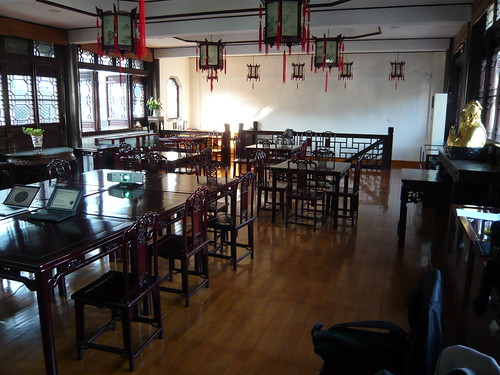
Classroom at the Confucius Temple in Shanghai
 GIZ, International Expert to the German International Cooperation’s Sino-German CSR Project in Beijing: This pilot project was a scoping exercise to develop a platform for exchange on international sustainability standards in China. While standards continue to play greater roles in China’s sustainable development and initial roundtable work was successful, stakeholders were more of the opinion that individual collaborations by standards bodies and stakeholders in China were higher priorities than a platform per se.
2012 and beyond: Understanding and acting in China’s unique domestic sustainability standards context and also maximizing the benefits of existing and future sustainability standards to aid China’s sustainable development requires continued research and resources. These twin goals of helping international standards bodies act more strategically in China and helping Chinese standards stakeholders (like farmers/producers, government standards bodies, civil society groups, and private sector actors) remains one of my top professional priorities for the foreseeable future.
 WTO Tribune/Golden Bee: I continue collaborating with the WTO Tribune, one of China’s pioneering corporate social responsibility research, consulting, and policy organizations on a number of projects to increase the sustainability and competitiveness of Fortune 500 enterprises operating in Chinese and international contexts.
2012 and beyond: Much has been written and said about the development of corporate social responsibility in China (including by me). I am confident that China’s governmental, private sector, and civil society organizations, including the WTO Tribune, will continue to blend the best of international and domestic theory toward more transparent, accountable, and effective sustainable development practices.
 ChinaDialogue: I authored two pieces for ChinaDialogue, one on “China’s Opportunity to Embrace Sustainability Standards” and the other on Apple’s supply chain practices, “An Open Letter to the Next Steve Jobs.” My writing on Apple was inspired by work by Ma Jun at the Institute of Public and Environmental Affairs on exposing alleged environmental abuses by Apple suppliers.
2012 and Beyond: I continue to be inspired by ChinaDialogue and its collaborators like Ma Jun, along with other environmental pioneers in China, just as I continue to be inspired and amazed by China’s breakneck economic, social and environmental transformations. Apple responded well to the pressure put on it by Chinese NGOs, Chinese and international media, and consumers by holding meetings with many NGOs on how to improve its practices. The media and international NGOs need to continue to put pressure on the electronics sector, which remains far behind in its sustainability action as compared to its technological wow factor. Still, getting a laggard like Apple to improve its practices should be counted as a victory for workers and the environment. But we cannot rest until all living beings on this planet live in dignity and in clean surroundings.

Personal (Projects)
Gardening: I continue to cultivate a garden in the beautiful city of Chiang Mai. I am also helping friends launch a site celebrating the beauty of urban gardens called Urban Micro Garden.
Days as Tramps: I continue to edit the text of Work in Progress, a book that is headed soon to eyes near you, maybe even yours!
Learning Thai: I have begun learning Thai in the one-year course at the Chiang Mai University Language Institute. I am overjoyed with my teacher. If anything, the course is too fast. By the end of the year, we are expected to read, write, and speak Thai fairly well. So far so good!
Puppy: Beaffin the puppy is the newest addition to my family in Thailand.
If you’re still reading, thanks for taking an interest. Now take a deep breath. Are you living a life that is honest to yourself and your ideals? Are you giving your body the nourishment it needs? Are you sharing your appreciation with the people who matter most to you? I hope you take a moment to find your direction and “move confidently in the direction of your dreams.” (Thoreau) Or, as Abraham Lincoln said, “Be sure you put your feet in the right place, then stand firm.”
In closing, I wish all of my collaborators, friends, and allies, along with all who live passionately to give nature a voice in human affairs…
All the best in 2012!
Ok, one last thing…as an Easter egg to fellow Old China Hands, below is a picture from 2010 that you won’t find in the capital. Not that this picture makes “luxury” seem so appealing anyway. (For those non China Hands, Beijing banned “luxury” advertisements in 2011). The depicted image, in truth, isn’t an advertisement, but a partition to a giant housing development that workers had their own uses for!

July 10th, 2011 by JJW
Dear Apple:
That I am writing this letter is as unexpected as it is important. I abandoned most of my activist rhetoric in college, deciding to stake a career on working to cultivate enlightened corporate self-interest as the quickest way to a sustainable world. I usually work with and for corporations to help them be green, responsible, and competitive. So don’t take this letter as an attack from an environmental purist. I’ve seen a lot of bad things, but nothing quite like your case.
I’m writing this letter as a warning about the trouble you’ve gotten yourself into. Before my most recent trip to China, before I was shown the evidence soon to be released, I had assumed that you had your China supply chain under control, that the social unrest at the Foxconn factories would have woken you up to the importance of implementing strict social and environmental principles in factories that manufacture your magical products. I thought your passive attitude toward the sourcing of conflict minerals in your electronic circuitry was really just a cover while you flat-out hard pressed for an internal scramble to work with industry initiatives, government regulators, and suppliers to prevent guilt by association.
Instead, the evidence presented to me in Beijing last week of your mismanagement in China is shocking. The horrible pictures have not been released yet, or at least have not been tagged to you. I assume you know what I am talking about. Yet maybe I cannot assume this. You seem to have no idea of the storm your brand is about to get swept up in.
What is going on? What are you thinking? Do you simply not know? Did your subordinates fail to raise this huge risk to your attention? Do you assume that Chinese civil society is too weak to expose you, or that people are not going to care about hard-to-pronounce factory towns? Are you expecting to just hide this information?
You have time to make amends before your brand takes a beating the likes of which no company since Nike has so unconsciously brought upon itself. How you respond to the truth is going to sway a lot of your faithful, your bottom line, and your brand.
Here’s what you should do:
1) Take responsibility. Publicly. Now. Declare that you’re going to stop the pollution in your supplier factories. Then do whatever it takes to fulfill your promises.
2) Make your principles match your image. Make your manufacturing base as slick as your latest miracle products, your supplier factories’ discharge as clean as your website and stores.
3) Increase transparency. Open up your supply chain to NGOs, the media, and regulators. They’re not going to steal or sell your trade secrets. They’ll even help you regain public trust by being your eyes and ears to prevent future horrors. Make deals with these groups so they’ll go to you to find solutions before they go to the media.
4) Be a leader and transform the sector. Use third party verified standards or codes of conduct that will prove you’re doing a better job than your competitors so they need to follow your sustainability leadership. Donate money to NGOs so they can monitor your competitors too. Are you really so behind the times that you let PC manufacturers outshine you? That’s not cool. Not cool at all.
5) Measure results and communicate: Show progress in a measured way. Leading chemical companies manage their supply chain pollution better than you and show year-on-year improvements. You’ve gotten off easy because people do not easily associate your products with poisoning the earth, but that is changing.
6) Label your products as environmentally friendly. Use standards like EPEAT that measure a basket of social and environmental indicators and present that information at the point of sale with labels ranging from gold to silver to bronze. If you don’t take responsibility for this, others are going to force you into a corner.
7) Apologize. Nobody’s perfect, even a California tech god like yourselves.
8) Act quickly. One rotten apple…well, we really don’t want that to happen.
I hope this exercise hasn’t been too painful. I don’t mean to be harsh and I’ve tried to be constructive. The terms are really very simple. Be the kind of change your customers want you to be or they soon won’t be your customers, no matter how great the products.
The facts to speak for themselves. And believe me, these facts don’t speak in soft tones with automatic volume limiting technology. These facts scream sour.
Your stockholders and customers should be the most concerned. And nobody’s going to have to write a letter to them. If you don’t make cider of your falling fruit, your faithful just might start lobbing a few things your way.
Respectfully yours,
Joshua Wickerham
August 4th, 2010 by JJW
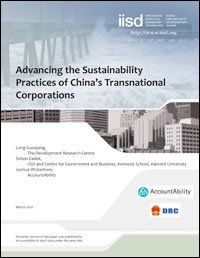 The International Institute for Sustainable Development (IISD) has published the final version of a paper I co-wrote with Simon Zadek and Long Guoqiang as part of a multi-year “sustainable trade strategy for China” with multiple stakeholders from China and abroad, supported by the Swiss SECO.
As IISD writes on its website,
“This paper examines how the Chinese business community can best use international sustainability standards to enhance its competitiveness in global markets, in so doing more effectively placing themselves on a sustainable economic path. We highlight the opportunity for Chinese businesses, supported by enabling public policies, to become a force in shaping the next generation of sustainability standards in global markets as a competitive strategy consistent with China’s broader interests. Doing this requires Chinese actors to engage more deeply in existing standards initiatives and take a more explicit role among the communities that have developed and now govern these standards. Effective engagement in such standards is a means of offsetting competitive disadvantages or creating competitive advantages when businesses and nations choose a more sustainable development path. This paper sets out both strategic options for businesses and policy options for the Chinese government to realize sustainable development and competitiveness goals.” —IISD Publications Centre
This is the final version of a paper launched a year earlier by AccountAbility, which I posted about here.
Download the final paper here.
July 8th, 2010 by JJW
 I spoke in June at the ISEAL Alliance annual conference, “Through the Looking Glass: The Future of Social and Environmental Standards,” in London on prospects for voluntary standards development in China and from a base in China. Here’s a bit of background and a summary of my presentation, now posted to the ISEAL Alliance website.
The ISEAL (International Social and Environmental Accreditation and Labeling) Alliance is a membership organization for international voluntary standards systems (VSS). ISEAL sets standards for standards groups and has been working on impacts codes. ISEAL members include the Forest Stewardship Council, the Marine Stewardship Council, Fairtrade Labeling Organization, UTZ Certified, Rainforest Alliance/Sustainable Agriculture Network, and many other standards groups that have been at the forefront of what Michael Conroy calls the ‘certification revolution.”
 International voluntary standards systems (and ISEAL Alliance members in particular) are reshaping international markets through numerous ways. They help companies “compete up” on social and environmental impacts by offering credible market signals for what economic theory used to call externalities. These standards help governments enforce environmental regulations like the Lacey Act that prohibits importation of unsustainable wood in the US. They can hep companies and governments procure goods and services sustainably.
The conference was very interesting in that for the first time in my experience, multiple stakeholders from business, government, and the standards community were in the same room. Wal-Mart’s representative in charge of sustainable procurement had only heard the week before that standards organizations have such an important role. Standards groups had presentations on life-cycle analysis from leading actors like Greg Norris.
My presentation in London focused on China and voluntary standards. I got into this area through research on a “Sustainable Trade Strategy” for China with AccountAbility, the International Institute for Sustainable Development, the Chinese State Council’s think tank the Development Research Center. That researched focused largely on the role of voluntary standards in shaping the future competitiveness of China’s transnational corporations. The paper touched only lightly on the role China would have on voluntary standards systems. (Read more about that here). My presentation in London filled some of the gaps.
Here’s a link to my powerpoint on “International Voluntary Standards in China: Present Conditions and Future Possibilities”.
Here’s a quick summary of my presentation:
(I apologize that I write bare-bones powerpoints and I don’t have a transcript of my presentation).
1) Context: International voluntary standards developed largely at the “end of history” under US-dominated international market conditions and now face BRIC challengers.
2) China is doing a lot to develop its own standards and has the power to influence markets to benefit Chinese corporations and Chinese standards bodies (indeed, any other strategy would be illogical)
3) Prospects for the uptake of standards in China, ie, what Chinese consumers want, and which standards have already been taken up, etc.
4) Thoughts on MNC success in China and similar industry development, ie, the history of business registration in China, development of international accounting standards in China, and the recent rapid development of China’s Corporate Social Responsibility policy environment and company actions.
5) A common strategy for international VSSs: local interface/global consistency,
6) Priorities on achieving a move toward converging local and international standards in China so as to avoid setting back the development of standards in China.
After my presentation, I had two major takeaways:
1) International standards bodies know that China is a game-changer and they take it as a given that they must adapt quickly and in a coordinated way.
2) International stakeholders recognize that China is one of the few developing countries that can actually achieve relatively high success in getting international organizations and corporations to respect local norms, customs, and business environment. Or, in one participant’s words, (I paraphrase), “lots of developing countries ask companies to respect local development priorities, but only China can actually make this happen.” We were discussing this in the context of Google’s recent actions in the China market.
There’s a lot more work to be done in this area and the landscape is shifting fast.
November 18th, 2009 by JJW
 I took Obama’s visit as a chance to write about how company action should play a more prominent role in the trust building and competitiveness equation of the Sino-US relationship. My Guardian article, A green call to arms, (link to Chinese version here) centers on climate change. Meanwhile, my ChinaDialogue piece, Obama’s China moment (and the Chinese version) addresses wider issues of corporate social responsibility. I focus especially on sustainability standards and other global “rules of the game” that the US and Chinese governments should encourage companies to improve jointly.
Guardian: A green call to arms (Chinese)
ChinaDialogue: Obama’s China moment (Chinese)
May 5th, 2009 by JJW
 A Paper by Long Guoqiang, Simon Zadek, and Joshua Wickerham
AccountAbility’s Managing Partner, Simon Zadek, launched this report at the Boao Forum this year in Hainan and at the China Entrepreneur Club’s Daonong Green Companies Forum in Beijing. This paper is part of a two-year study with the State Council’s Development Research Center on “China’s sustainable trade strategy” working with several central-level Chinese research organizations and three international think tanks.
This paper examines how the Chinese business community can best use international sustainability standards to enhance their competitiveness in global markets and more effectively place themselves on a sustainable economic pathway.
It highlights the opportunity for Chinese businesses, supported by enabling public policies, to become a force in shaping the next generation of sustainability standards in global markets as a competitive strategy consistent with China’s broader interests. Doing so will require deeper engagement in existing standards initiatives, and a more explicit role amongst the communities that have developed and now govern them. Effective engagement in such standards is a means of off-setting competitive disadvantages, and creating competitive advantages when businesses and nations choose a more sustainable development path.
This paper sets out both strategic options for businesses and policy options for the Chinese government to realise sustainable development and competitiveness goals.
Download the full English version, full Chinese version, or the bilingual executive summary.
AccountAbility DRC _ China Sustainable Trade Strategy_Press Release_Chinese and English the press release.
Mentioned in the Harvard Business Review blog here.
Video interview with me on NetEase discussing link between sustainability and Chinese competitiveness (in Mandarin Chinese).

