Archive for the 'civil society' Category
January 3rd, 2012 by JJW
 I’d like to share what I’ve been working on in 2011, along with some inspiring thoughts for 2012 and beyond.
Since moving from Beijing to Thailand in mid 2010, I’ve had the pleasure to work on a number of projects with many outstanding organizations and individuals. I have continued to travel to China every two to three months on various projects to grow relationships and extend trust in face-to-face meetings. I look forward to continuing and deepening collaborations in 2012 and beyond.
These projects have given me the opportunity to grow relationships in China, Asia, Europe, North America, and globally through new approaches to my interests, such as multi-stakeholder governance (mainly international multi-stakeholder voluntary sustainability standards), competitiveness (through a sustainability edge), sustainability information transparency (getting data about sustainable development to the decision makers who matter most), sustainable leadership (leading from ones higher purpose), international sustainability standards (potent tools to grow a just, green global economy), and the management of complex and visionary change (life, research, writing, and communicating).
This post is both a note of appreciation to my recent collaborators, a description of what we have been working on, and thoughts of what is to come:
 The ISEAL Alliance: Advising on China Engagement and Sustainability Information Transparency: I continue to advise the ISEAL Alliance (the global association of international sustainability standards) and its members (leading sustainability standards like FSC, MSC, SAI, FairTrade International, GoodWeave, the Alliance for Water Stewardship, Rainforest Alliance, and other) on approaches to China engagement. I also work to help ISEAL and its members adapt to the growing “radical transparency” or “sustainability information transparency” space ushered in through new information technology and leading companies and organizations like GoodGuide, the Ecolabel Index, the Sustainability Consortium, EkoBai, and many others.
 For 2012 and beyond: I have been collaborating with the ISEAL Alliance and its member standards since 2008 when I represented AccountAbility in China and helped organize a meeting in London between standards bodies and some of China’s top trade researchers in a project between the International Institute for Sustainable Development, the Chinese State Council’s Development Research Center, and the Swiss SECO, detailed in the paragraph below.
I work with the ISEAL Alliance because I foresee that the potent combination of dependable, measurable multi-stakeholder standards, and the tools to bring this information to decision makers will continue to dramatically improve the sustainability of global trade. I advise ISEAL on China because sustainability standards are a crucial aspect of civil governance that provide pathways for China to have its sustainable development efforts recognized in global markets. Additionally, the development of new standards with Chinese participation in setting the “rules of the game” are crucial to China’s soft power and its peaceful integration into a the emerging world order. For more information, you can read the IISD report I co-authored on “Advancing the Sustainability Practices of China’s Transnational Corporations.” (external link).

 WWF/USAID: Roundtable on Responsible Live Reef Food Fish Trade in China: I was hired by the WWF Coral Triangle Network Initiative, with support from USAID, to design an initial strategy and work plan that brings together the key business and government stakeholders in mainland China and Hong Kong to improve the sustainability of the trade in live fish from the Coral Triangle region. Greater China’s role, as the largest buyer of this fish (sold mainly in restaurants and hotels), is one key to ensuring that coral ecosystems are protected from overfishing and unsustainable fishing practices.

For 2012 and beyond: Like WWF’s important and game-changing Market Transformations Initiative (see Jason Clay’s inspiring TEDx talk), this project aims to involve companies and governments in protecting shared resources in biodiverse regions. The work is difficult and many existing incentives encourage unsustainable practices, but I always enjoy a challenge, especially when it involves mechanisms for helping China become a more trusted neighbor and regional player. From an economic perspective alone, it may be easy to overlook such a small portion of the overall fish trade value chain, but when you factor in the reputations of hotels, restaurants and greater China itself, I predict that increasing the sustainability of this kind of commodity value chain will become part of China’s charm offensive in the years to come. Other commodities with soft power kudos available for China’s taking? Palm oil, sugar, fish, timber, and soy, to name a few.
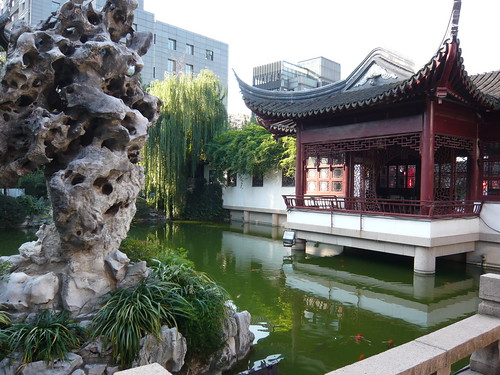
"Tiger Howl Rock" (left) and "Listening to the Rain Pavilion" (right) at Shanghai Confucius Temple, where I taught a class on sustainability and leadership in the Chinese context
 DotEco: Greater China Liaison: DotEco is an innovative project to develop the .eco top-level domain name as a space managed by and for the international environmental community. If the .eco bid is accepted by the internet governance authority, ICANN, .eco would be the first “community-priority” domain name and set a precedent for non-commercial, collaboratively-governed top-level domain names.
For 2012 and beyond: I hope that my work to bring on leading Chinese environmental NGOs like the Institute of Public and Environmental Affairs, Friends of Nature, ChinaDialogue, and the Global Environmental Institute helps prove to ICANN that “.eco” is a universally-recognized environmental signifier. I hope that the .eco bid is approved and becomes a new international mechanism to provide accountable, robust, and peer-managed sustainability information on and for organizations around the world. Read more about the project at DotEco.org

Global Leadership Program of Berlitz: facilitator of a pilot executive leadership training program: I was asked to lead a half day session on leadership and sustainable development in the Chinese context. My goal was to change enough hearts and minds of the assembled business executives to at least offset the carbon footprint of my six hours of flying from Chiang Mai to Shanghai. Based on feedback, I think we more than accomplished this, as well as gaining a better understanding about how to achieve success–sustainably–in an Asian context. Many of the pictures in this post of the Shanghai Confucius Temple where I led this leadership session.
For 2012 and beyond: As this was a pilot project, we shall see whether next year takes me to other locals. Teaching a class like this about leading from ones higher ideals was very invigorating and I would relish the opportunity to develop the potential of both myself and others through future sessions in China and elsewhere.
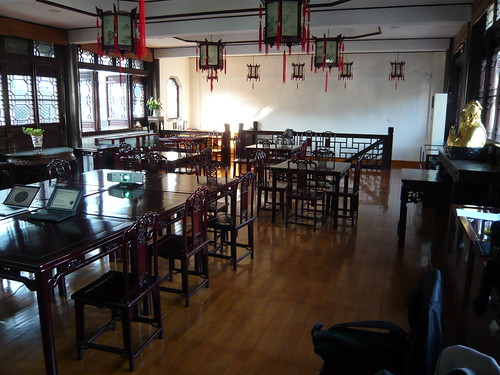
Classroom at the Confucius Temple in Shanghai
 GIZ, International Expert to the German International Cooperation’s Sino-German CSR Project in Beijing: This pilot project was a scoping exercise to develop a platform for exchange on international sustainability standards in China. While standards continue to play greater roles in China’s sustainable development and initial roundtable work was successful, stakeholders were more of the opinion that individual collaborations by standards bodies and stakeholders in China were higher priorities than a platform per se.
2012 and beyond: Understanding and acting in China’s unique domestic sustainability standards context and also maximizing the benefits of existing and future sustainability standards to aid China’s sustainable development requires continued research and resources. These twin goals of helping international standards bodies act more strategically in China and helping Chinese standards stakeholders (like farmers/producers, government standards bodies, civil society groups, and private sector actors) remains one of my top professional priorities for the foreseeable future.
 WTO Tribune/Golden Bee: I continue collaborating with the WTO Tribune, one of China’s pioneering corporate social responsibility research, consulting, and policy organizations on a number of projects to increase the sustainability and competitiveness of Fortune 500 enterprises operating in Chinese and international contexts.
2012 and beyond: Much has been written and said about the development of corporate social responsibility in China (including by me). I am confident that China’s governmental, private sector, and civil society organizations, including the WTO Tribune, will continue to blend the best of international and domestic theory toward more transparent, accountable, and effective sustainable development practices.
 ChinaDialogue: I authored two pieces for ChinaDialogue, one on “China’s Opportunity to Embrace Sustainability Standards” and the other on Apple’s supply chain practices, “An Open Letter to the Next Steve Jobs.” My writing on Apple was inspired by work by Ma Jun at the Institute of Public and Environmental Affairs on exposing alleged environmental abuses by Apple suppliers.
2012 and Beyond: I continue to be inspired by ChinaDialogue and its collaborators like Ma Jun, along with other environmental pioneers in China, just as I continue to be inspired and amazed by China’s breakneck economic, social and environmental transformations. Apple responded well to the pressure put on it by Chinese NGOs, Chinese and international media, and consumers by holding meetings with many NGOs on how to improve its practices. The media and international NGOs need to continue to put pressure on the electronics sector, which remains far behind in its sustainability action as compared to its technological wow factor. Still, getting a laggard like Apple to improve its practices should be counted as a victory for workers and the environment. But we cannot rest until all living beings on this planet live in dignity and in clean surroundings.

Personal (Projects)
Gardening: I continue to cultivate a garden in the beautiful city of Chiang Mai. I am also helping friends launch a site celebrating the beauty of urban gardens called Urban Micro Garden.
Days as Tramps: I continue to edit the text of Work in Progress, a book that is headed soon to eyes near you, maybe even yours!
Learning Thai: I have begun learning Thai in the one-year course at the Chiang Mai University Language Institute. I am overjoyed with my teacher. If anything, the course is too fast. By the end of the year, we are expected to read, write, and speak Thai fairly well. So far so good!
Puppy: Beaffin the puppy is the newest addition to my family in Thailand.
If you’re still reading, thanks for taking an interest. Now take a deep breath. Are you living a life that is honest to yourself and your ideals? Are you giving your body the nourishment it needs? Are you sharing your appreciation with the people who matter most to you? I hope you take a moment to find your direction and “move confidently in the direction of your dreams.” (Thoreau) Or, as Abraham Lincoln said, “Be sure you put your feet in the right place, then stand firm.”
In closing, I wish all of my collaborators, friends, and allies, along with all who live passionately to give nature a voice in human affairs…
All the best in 2012!
Ok, one last thing…as an Easter egg to fellow Old China Hands, below is a picture from 2010 that you won’t find in the capital. Not that this picture makes “luxury” seem so appealing anyway. (For those non China Hands, Beijing banned “luxury” advertisements in 2011). The depicted image, in truth, isn’t an advertisement, but a partition to a giant housing development that workers had their own uses for!

October 11th, 2011 by JJW
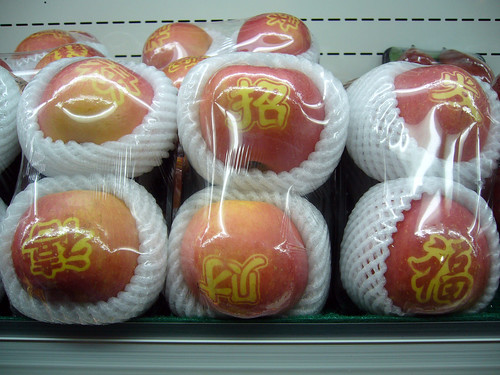
Ever since I got a sneak peak at the evidence Chinese environmental groups recently leveled against Apple, I’ve been researching, gasping, and writing about some appalling practices and how to improve them. Not only does the production of personal electronics rank low on social and environmental impacts, but Apple’s practices put it at the bottom of a very gross barrel.
Since I’m trying to make things better rather than sink into misery, I thought it was time I update a little of the progress that’s been made since I wrote my “open letter to Apple.” (original version here, to ChinaDialogue version here).
Note: I have always been a big fan of Steve Jobs and feel saddened by his early demise. I note that it is important to grieve, but grief is not a reason to stop making progress on this very important issue. On the contrary, I think that Apple should work to improve the social and environmental impacts involved in manufacturing its products as a way to burnish and secure the legacy of its founder.
Apple Opens Up, But More Progress Needed
First, and most importantly, Apple apparently has broken its silence and agreed to speak with NGOs and other stakeholders about the alleged social and environmental issues at its suppliers in China. (See the ChinaDialogue article “Apple Breaks its Silence” by Xie Xiaoping).
This is positive–even amazing–news which shows, just maybe, that Apple’s sustainability team is waking up to the power of effective stakeholder engagement.
For a very informative look at how a big brand used stakeholder engagement to overcome major difficulties, read the MIT Sloan Review article “How Gap Inc. Engaged With its Stakeholders” by industry veteran Sean Ansett and colleagues.
Conclusions from “How Gap Inc. Engaged With its Stakeholders” that Apple might benefit from:
- Stakeholder engagement is not easy; the process is often expensive and slow.
- Identifying and prioritizing stakeholders can enable a company to focus on developing relationships with a few key stakeholder organizations.
- Over time, Gap’s stakeholder engagement strategy has improved perceptions of the company.
I hold my breath that Apple will increase sustainability information transparency. The company still seems to see its supply chain as a risk to its brand, rather than an opportunity to engage and bolster its brand, much less begin to lead the IT industry toward greater transparency and responsible management of manufacturing impacts.
Holding Tech Companies Accountable through Stronger International NGO and Media Action
Secondly, I take issue with how the press characterized the August 31, 2011 revelation in the IPEA report “The Other Side of Apple (II): Pollution Spreads Through Apple’s Supply Chain” story as simply about how Chinese environmental groups were accusing Apple of misdeeds, rather than investigating the claims themselves. I am glad the story made headlines, but not investigating further seems like bad journalism.
On a larger and wider note, the press has almost universally failed to address the more systematic concerns the report brought up, like whether Apple should be exempt from taking responsibility for the ways in which its products are made. Some stories are exceptions, which I note below.
I guess I should be happy that the story got headlines in almost every major newspaper. I just hope the issues do not get swept aside. Now that the world is over the shock of the loss of Steve Jobs, how long before the admiration Apple fans have gets wedded to a serious movement to hold technology companies to account?
As he told TechCrunch, Monologist Mike Daisey characterizes Apple’s current manufacturing processes as Apple’s “terrible sin.”
He also points the finger at himself and everyone listening to say it’s “irresponsible for us not to consider” these issues. I completely agree with him. In fact, Daisey has become one of my favorite public figures, not just for his consciousness-raising work on Apple (I have yet to see, read or hear his latest work “the Agony and Ecstasy of Steve Jobs”), but because he is also so articulate, expressive, and expressive while also being very socially aware, and engaged enough to do something about his feelings.
Daisey rightly points out that “there are no nonprofits within the tech industry that are even concerned with these issues.” He adds, “There’s no one even petitioning these companies in the first world to have independent monitoring in the third world.”
Daisey states (incorrectly) that there is “nobody [monitoring] on the ground in China.” What I would say is that there are not as many people on the ground as there should be. There are a number of international voluntary standards and company codes of conduct that are dedicated to improving working conditions in China and around the world. His point, I think, is that Apple and other tech companies have chosen to spend more resources trying to prevent consumers and the public from seeing what is happening in factories than on improving conditions there. Such backward stances by these companies go against the historical currents of our times, which flow toward more transparency, not less, and hopefully, over time, lead to more sustainability outcomes that improve everyone’s circumstances. In an era of economic globalization, we need solutions like international voluntary sustainability standards adequately applied to lift everyone’s boats.

To illustrate just how silly it is to try to prevent supply chain transparency, even NGOs and consumers in China are starting to wake up to social and environmental issues. (See this story on Al-Jazeera, from which the picture above was taken).
This video of Mike Daisey is very eye-opening, entertaining, and visionary (sorry, the video doesn’t seem to be displaying, despite the embed, so click here to view the video, accompanying TechCrunch story, and other videos from the interview):
Other Stories about Apple
Thirdly, since writing the open letter to Apple, I have come upon many more resources and articles about Apple and I’d like to share them. A big thanks goes to folks like Rich Brubaker at CollectiveResponsibility/All Roads Lead to China/CEIBS and other comrades in the sustainability sector in China. I thank Rich, in particular, for introducing me to Mike Daisey’s work.
Here are some other stories about Apple and Jobs that I haven’t linked to elsewhere in this post:
The Human Side of Tech Manufacturing
Lastly, through reviewing this information, I have come to see more of the human side of global manufacturing. Yes, I’ve toured factories in China before, yes I’ve read statistics, written reports, interviewed manufacturing company presidents, attended stakeholder meetings of international labor standards like Social Accountability International (SA8000) in China, read Peter Hessler’s books, and so on, but I had never thought about workers in quite the same way as after seeing this brief documentary/video “Dreamwork China,” which interviews and photographs Foxconn workers:
Click on Dreamwork China to see more.
I look forward to watching how journalists, supply chain experts, responsible investment gurus, CSR managers, members of civil society, researchers, policy experts, and others respond to Apple’s invitation to help get its house in order. I hope these stakeholders work together to implement a long-term vision and spur Apple along the noble path, even if it strays.
July 10th, 2011 by JJW
Dear Apple:
That I am writing this letter is as unexpected as it is important. I abandoned most of my activist rhetoric in college, deciding to stake a career on working to cultivate enlightened corporate self-interest as the quickest way to a sustainable world. I usually work with and for corporations to help them be green, responsible, and competitive. So don’t take this letter as an attack from an environmental purist. I’ve seen a lot of bad things, but nothing quite like your case.
I’m writing this letter as a warning about the trouble you’ve gotten yourself into. Before my most recent trip to China, before I was shown the evidence soon to be released, I had assumed that you had your China supply chain under control, that the social unrest at the Foxconn factories would have woken you up to the importance of implementing strict social and environmental principles in factories that manufacture your magical products. I thought your passive attitude toward the sourcing of conflict minerals in your electronic circuitry was really just a cover while you flat-out hard pressed for an internal scramble to work with industry initiatives, government regulators, and suppliers to prevent guilt by association.
Instead, the evidence presented to me in Beijing last week of your mismanagement in China is shocking. The horrible pictures have not been released yet, or at least have not been tagged to you. I assume you know what I am talking about. Yet maybe I cannot assume this. You seem to have no idea of the storm your brand is about to get swept up in.
What is going on? What are you thinking? Do you simply not know? Did your subordinates fail to raise this huge risk to your attention? Do you assume that Chinese civil society is too weak to expose you, or that people are not going to care about hard-to-pronounce factory towns? Are you expecting to just hide this information?
You have time to make amends before your brand takes a beating the likes of which no company since Nike has so unconsciously brought upon itself. How you respond to the truth is going to sway a lot of your faithful, your bottom line, and your brand.
Here’s what you should do:
1) Take responsibility. Publicly. Now. Declare that you’re going to stop the pollution in your supplier factories. Then do whatever it takes to fulfill your promises.
2) Make your principles match your image. Make your manufacturing base as slick as your latest miracle products, your supplier factories’ discharge as clean as your website and stores.
3) Increase transparency. Open up your supply chain to NGOs, the media, and regulators. They’re not going to steal or sell your trade secrets. They’ll even help you regain public trust by being your eyes and ears to prevent future horrors. Make deals with these groups so they’ll go to you to find solutions before they go to the media.
4) Be a leader and transform the sector. Use third party verified standards or codes of conduct that will prove you’re doing a better job than your competitors so they need to follow your sustainability leadership. Donate money to NGOs so they can monitor your competitors too. Are you really so behind the times that you let PC manufacturers outshine you? That’s not cool. Not cool at all.
5) Measure results and communicate: Show progress in a measured way. Leading chemical companies manage their supply chain pollution better than you and show year-on-year improvements. You’ve gotten off easy because people do not easily associate your products with poisoning the earth, but that is changing.
6) Label your products as environmentally friendly. Use standards like EPEAT that measure a basket of social and environmental indicators and present that information at the point of sale with labels ranging from gold to silver to bronze. If you don’t take responsibility for this, others are going to force you into a corner.
7) Apologize. Nobody’s perfect, even a California tech god like yourselves.
8) Act quickly. One rotten apple…well, we really don’t want that to happen.
I hope this exercise hasn’t been too painful. I don’t mean to be harsh and I’ve tried to be constructive. The terms are really very simple. Be the kind of change your customers want you to be or they soon won’t be your customers, no matter how great the products.
The facts to speak for themselves. And believe me, these facts don’t speak in soft tones with automatic volume limiting technology. These facts scream sour.
Your stockholders and customers should be the most concerned. And nobody’s going to have to write a letter to them. If you don’t make cider of your falling fruit, your faithful just might start lobbing a few things your way.
Respectfully yours,
Joshua Wickerham
July 5th, 2011 by JJW
“If China grasps the opportunities offered by sustainable certification, it can reap commercial, environmental and social rewards, while helping set the rules for a greener global economy.
International voluntary sustainability standards – such as the Forest Stewardship Council, which certifies sustainably managed forests and forest products – are tools for verifying socially sound and eco-friendly goods and services that play an increasingly important role in global trade. However, they are still relatively new and underused in China. These standards offer Chinese companies, officials and NGOs new ways to take part in setting the rules of the global economy, and a powerful instrument to help the country’s companies gain market rewards for good social and environmental performance. This is a soft-power strategy worthy of attention.”
Continue reading the full article on China Dialogue.
Or read my little explanation here. I feel as if this article hardly should be published with my name alone, for it has been the product of years of research with some of the greatest minds in sustainable development and economics that I have ever had the chance to work with.
The ideas of this article grew out of work I did with Simon Zadek (then Chief Executive of AccountAbility) and Long Guoqiang of the Development Research Center of the Chinese State Council, then vice director of the foreign economics department (now director). When we released the initial copy of our report “Advancing the Sustainable Competitiveness of China’s Transnational Corporations,” (final version here) Isabel Hilton, editor of China Dialogue, asked me to write about it on China Dialogue. In the meantime, I’ve gotten more familiar with the world of certification-based international voluntary sustainability standards and find them especially compelling as sustainable development tools among the panoply of possible approaches. So this China Dialogue article shows my interest in these types of standards. You won’t get a summary of the original research I did with Zadek and Long, but I hope the article does help you understand how sustainability standards are in many ways leading best practices with measurable positive sustainable development impacts that can help underpin China’s ambitions to be a sustainable global power.
September 11th, 2010 by JJW
 When I moved to Qingdao in 2002 after finishing undergrad, I lived in one of China’s earliest and largest national-level economic and technological development zones. Pervading The Zone were massive billboards displaying 10-meter high bust shots of the octogenarian Deng Xiaoping. Deng Xiaoping is widely recognized as laying the thoughts that have steered China to economic success over the last 30 years of “reform and opening up”. His steady, posthumous gaze seemed to be guiding the construction of infrastructure in The Zone. His vision shone upon the future bridge connecting The Zone to old Qingdao, and upon the various refineries and factories. His plan penetrated the department stores full of mannequins, sales staff and no customers. This was an eerie, eye-opening time, and The Zone had major impacts in how I have subsequently come to view the world.
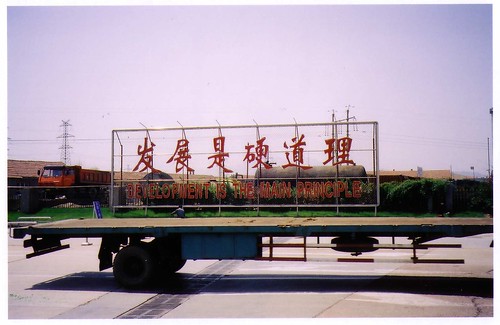
My strongest impression of Life in The Zone was one of Deng’s key quotes emblazoned everywhere on those giant billboards or in neon signs at the major entrances to the zone:  . (Chinese isn’t working for me in WordPress….most of the signs had “fazhan cai shi ying daoli” instead of the pictured “fazhan shi ying daoli“)
The English translation: “Development is the main principle.” Since I could could not read or speak a lick of Chinese when I crash landed there in Shandong Province, only after many more years of studying Chinese would I realize the more literal and telling translation of most of these signs (but not the sign pictured, if you want to get technical): “Development is the only hard truth.”
This hard truth had a profound affect on my psyche and my priorities. One of the most mind-boggling aspects to my young American mind undergoing its first China experiences then was just how much I had taken for granted that different levels of development have profound effects on peoples’ lives. Life in The Development Zone left the indelible impression that my rather self-involved American priorities were in need of a tune-up. Soon I was no longer the cynical postmodernist my education and culture had taught me was fine to strive for. I decided to devote hours and hours every day to studying Chinese and learning the mechanisms to explain China’s economic miracle.
I also fretted that all this economic growth would lead to unprecedented environmental destruction and decided to learn enough about the situation to (hopefully) make a difference.
I figure that a new paradigm combining the pragmatism and razor insight of Premier Deng with the advances in science, business strategy, and human ingenuity that development brings is one of the best strategies for steering our planet toward ecological, social, and economic sustainability.
When Fortune China‘s editor-in-chief asked me to blog for his magazine after he saw me speak at a American Chamber of Commerce in Hong Kong event organized by my friend Ed Ahnert on “corporate responsibility policy in China: opportunities for competitive advantage,” I decided to take him up on the offer.
Blogging for Fortune China, Celebrating 30 years of “Reform and Opening Up”

Corresponding with the thirtieth anniversary of Deng’s “reform and opening up” policy celebrated this month, I decided to call my bilingual Fortune China blog “Sustainable Development is the Main Principle” .
To my mind, Deng’s greatest insight was the importance of taking practical measures to deepen the world’s level of economic and social interdependence. Corporations, inter-government organizations, and international nonprofit organizations are the main globalizers of our age. “Sustainable Development is the Main Principle” focuses on how these organizations are contributing to sustainable development, with a special focus on how multinational corporations can gain and maintain competitiveness in this fast-changing environment.
Sustainable Development is the Main Principle–first blog posts
- Stakeholder engagement in Chinese history and what it means for business today: the story of Yang Jisheng and the earliest example of “stakeholder engagement” I’ve been able to find in Chinese history;
- The power and point of TED: branding, strategy and good ideas: all about how TED presentations can help with work, presentation skills, and changing the world. This post especially profiles the presentation by the World Wildlife Fund’s Jason Clay on his work with global corporations and improving the sourcing of global commodities to reduce negative environmental impacts.
More soon to come! I hope you enjoy reading “Sustainable Development is the Main Principle“!
August 4th, 2010 by JJW
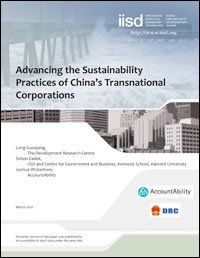 The International Institute for Sustainable Development (IISD) has published the final version of a paper I co-wrote with Simon Zadek and Long Guoqiang as part of a multi-year “sustainable trade strategy for China” with multiple stakeholders from China and abroad, supported by the Swiss SECO.
As IISD writes on its website,
“This paper examines how the Chinese business community can best use international sustainability standards to enhance its competitiveness in global markets, in so doing more effectively placing themselves on a sustainable economic path. We highlight the opportunity for Chinese businesses, supported by enabling public policies, to become a force in shaping the next generation of sustainability standards in global markets as a competitive strategy consistent with China’s broader interests. Doing this requires Chinese actors to engage more deeply in existing standards initiatives and take a more explicit role among the communities that have developed and now govern these standards. Effective engagement in such standards is a means of offsetting competitive disadvantages or creating competitive advantages when businesses and nations choose a more sustainable development path. This paper sets out both strategic options for businesses and policy options for the Chinese government to realize sustainable development and competitiveness goals.” —IISD Publications Centre
This is the final version of a paper launched a year earlier by AccountAbility, which I posted about here.
Download the final paper here.
July 8th, 2010 by JJW
 I spoke in June at the ISEAL Alliance annual conference, “Through the Looking Glass: The Future of Social and Environmental Standards,” in London on prospects for voluntary standards development in China and from a base in China. Here’s a bit of background and a summary of my presentation, now posted to the ISEAL Alliance website.
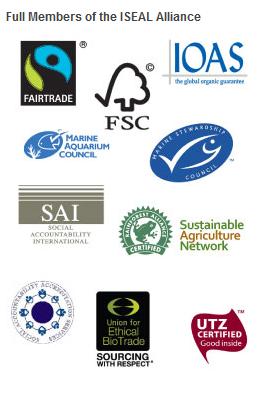
The ISEAL (International Social and Environmental Accreditation and Labeling) Alliance is a membership organization for international voluntary standards systems (VSS). ISEAL sets standards for standards groups and has been working on impacts codes. ISEAL members include the Forest Stewardship Council, the Marine Stewardship Council, Fairtrade Labeling Organization, UTZ Certified, Rainforest Alliance/Sustainable Agriculture Network, and many other standards groups that have been at the forefront of what Michael Conroy calls the ‘certification revolution.”
 International voluntary standards systems (and ISEAL Alliance members in particular) are reshaping international markets through numerous ways. They help companies “compete up” on social and environmental impacts by offering credible market signals for what economic theory used to call externalities. These standards help governments enforce environmental regulations like the Lacey Act that prohibits importation of unsustainable wood in the US. They can hep companies and governments procure goods and services sustainably.
The conference was very interesting in that for the first time in my experience, multiple stakeholders from business, government, and the standards community were in the same room. Wal-Mart’s representative in charge of sustainable procurement had only heard the week before that standards organizations have such an important role. Standards groups had presentations on life-cycle analysis from leading actors like Greg Norris.
My presentation in London focused on China and voluntary standards. I got into this area through research on a “Sustainable Trade Strategy” for China with AccountAbility, the International Institute for Sustainable Development, the Chinese State Council’s think tank the Development Research Center. That researched focused largely on the role of voluntary standards in shaping the future competitiveness of China’s transnational corporations. The paper touched only lightly on the role China would have on voluntary standards systems. (Read more about that here). My presentation in London filled some of the gaps.
Here’s a link to my powerpoint on “International Voluntary Standards in China: Present Conditions and Future Possibilities”.
Here’s a quick summary of my presentation:
(I apologize that I write bare-bones powerpoints and I don’t have a transcript of my presentation).
1) Context: International voluntary standards developed largely at the “end of history” under US-dominated international market conditions and now face BRIC challengers.
2) China is doing a lot to develop its own standards and has the power to influence markets to benefit Chinese corporations and Chinese standards bodies (indeed, any other strategy would be illogical)
3) Prospects for the uptake of standards in China, ie, what Chinese consumers want, and which standards have already been taken up, etc.
4) Thoughts on MNC success in China and similar industry development, ie, the history of business registration in China, development of international accounting standards in China, and the recent rapid development of China’s Corporate Social Responsibility policy environment and company actions.
5) A common strategy for international VSSs: local interface/global consistency,
6) Priorities on achieving a move toward converging local and international standards in China so as to avoid setting back the development of standards in China.
After my presentation, I had two major takeaways:
1) International standards bodies know that China is a game-changer and they take it as a given that they must adapt quickly and in a coordinated way.
2) International stakeholders recognize that China is one of the few developing countries that can actually achieve relatively high success in getting international organizations and corporations to respect local norms, customs, and business environment. Or, in one participant’s words, (I paraphrase), “lots of developing countries ask companies to respect local development priorities, but only China can actually make this happen.” We were discussing this in the context of Google’s recent actions in the China market.
There’s a lot more work to be done in this area and the landscape is shifting fast.
June 5th, 2010 by JJW
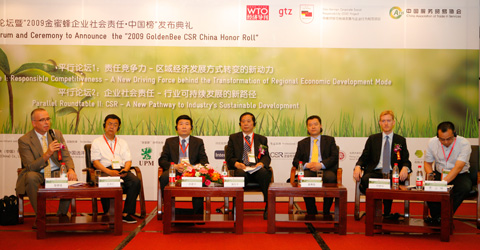
Fifth annual Golden Bee Conference: Regional Responsible Competitiveness Panel, image courtesy of WTO Tribune
Here is a summary of my remarks at the fifth annual Golden Bee conference in Beijing, speaking on a panel about how governments, companies, and civil society are working together to shift markets to reward responsible business action and make development more sustainable.
The session was chaired by the head of the Sino-German CSR Project, Rolf Dietmer, and had representatives from four provincial and district CSR initiatives, including Shandong, Shanghai Pudong, Jiangsu and Sichuan, plus a representative form China Unicom. My work with Chinese provincial economics planners has centered on the textiles and medicines sectors in Zhejiang through Responsible Competitiveness work with AccountAbility.
WTO Tribune wrote an article here (“Government duty-bound “responsibility”….in Chinese: ??“?”???) about the session here and captured some of my main points, but which I summarize here. (The entire transcript of my remarks in Chinese can be found here.
My main points:
1) Shifting markets to reward responsible business action requires a level playing field that no single sector (civil society, government, or business) can provide;
2) Chinese government officials at the provincial level are unsurpassed globally in their level of innovation and activity to promote new ways ;
3) Each provincial system is unique and there is need for coordination amongst local governments, the center and international stakeholders;
4) This unique approach to promoting sustainable development is both an asset and a liability, because if Chinese stakeholders do not coordinate properly, their market signals will be ignored by international buyers, ie, Chinese standards may not be recognized;
5) Chinese government officials, working with businesses, and using the power of the government bureaucracy, the media and civil society to promote good company practices and punish the bad, have the chance to clarify the way voluntary sustainability standards (such as the SA8000, GRI, ISO, AA1000, CSC9000T, FSC, etc) mature at the national and international levels;
6) Rather than create additional hoops for companies to jump through, governments can achieve economic, social environmental objectives by leveraging existing market mechanisms such as voluntary sustainability standards.
I add a point 7) International voluntary sustainability standards systems should see the power of Chinese stakeholders to pick winning standards as a wake-up call to be more serious about engaging in China and as an opportunity to scale up the impacts of their standards, since China plays such an integral part in so many global supply chains.
January 6th, 2008 by JJW
 This article is the result of many years of research with HIV prevention and anti-discrimination groups in my then-home of Shanghai. I had much help from people who choose to remain anonymous. Their stories and many more I hope to one day flush out in a book on the topic of modern gay rights in China.
My goal in writing this article was not to be provocative or overly political, but simply to bring to light one of the more mysterious episodes in modern Chinese gay history: simply, how and why a successful gay counseling and health hotline would suddenly cease operations. Copy is available electronically on many academic journal sites or directly upon request. (joshua *dot* wickerham *at* gmail *dot com).
In addition to my indebtedness to the people quoted in the article, special thanks goes to several friends at UCSD, Johns Hopkins, and the Princeton in Asia program who read drafts and made useful suggestions. These friends continue to play crucial roles with the Beijing CDC and the Clinton Foundation, and as a Fulbright Scholar. These friends are real heroes and inspire me as they continue working with this pandemic’s most stigmatized groups. I am also indebted to Bill Valentino, VP of Corporate Social Responsibility for Bayer China, who continues to lead the business case for HIV prevention, and Chung To of the Chi Heng Foundation, who remains a voice for Chinese gays and children orphaned by HIV/AIDS. Both provided last-mile support. Lastly, I owe a debt of gratitude to Jim Fallows of The Atlantic, who encouraged me to submit this work to The Harvard Gay & Lesbian Review (Now The G&L Review Worldwide) and to editor Richard Schneider, who improved the copy. Apologies to my advisor Susan Shirk who suggested I’d have to choose between doing sustainable environmental development work and HIV research. Seeing as both are critical, I just more often decline cocktail parties invitations and reject television’s numbing warmth.
November 23rd, 2007 by JJW
 My second interview with Dr. Jane Goodall, DBE, personal hero, friend and bringer of hope to youth of all ages. Published on China Dialogue. I saw her in LA the next day at her annual Roots & Shoots Day of Peace event in Griffith Park. When I asked her about how she greeted Pan Yue, she smiled and said, “Oh no! More questions?” Yes, more questions. And lots of answers. Quite an inspirational interview.

